A 1% fee costs about a quarter of your money
1% sounds small. Over 30 years, it can take about a quarter of what you end up with.
Fees compound just like returns do. That doesn't mean every fee is bad, but every fee should earn its keep.
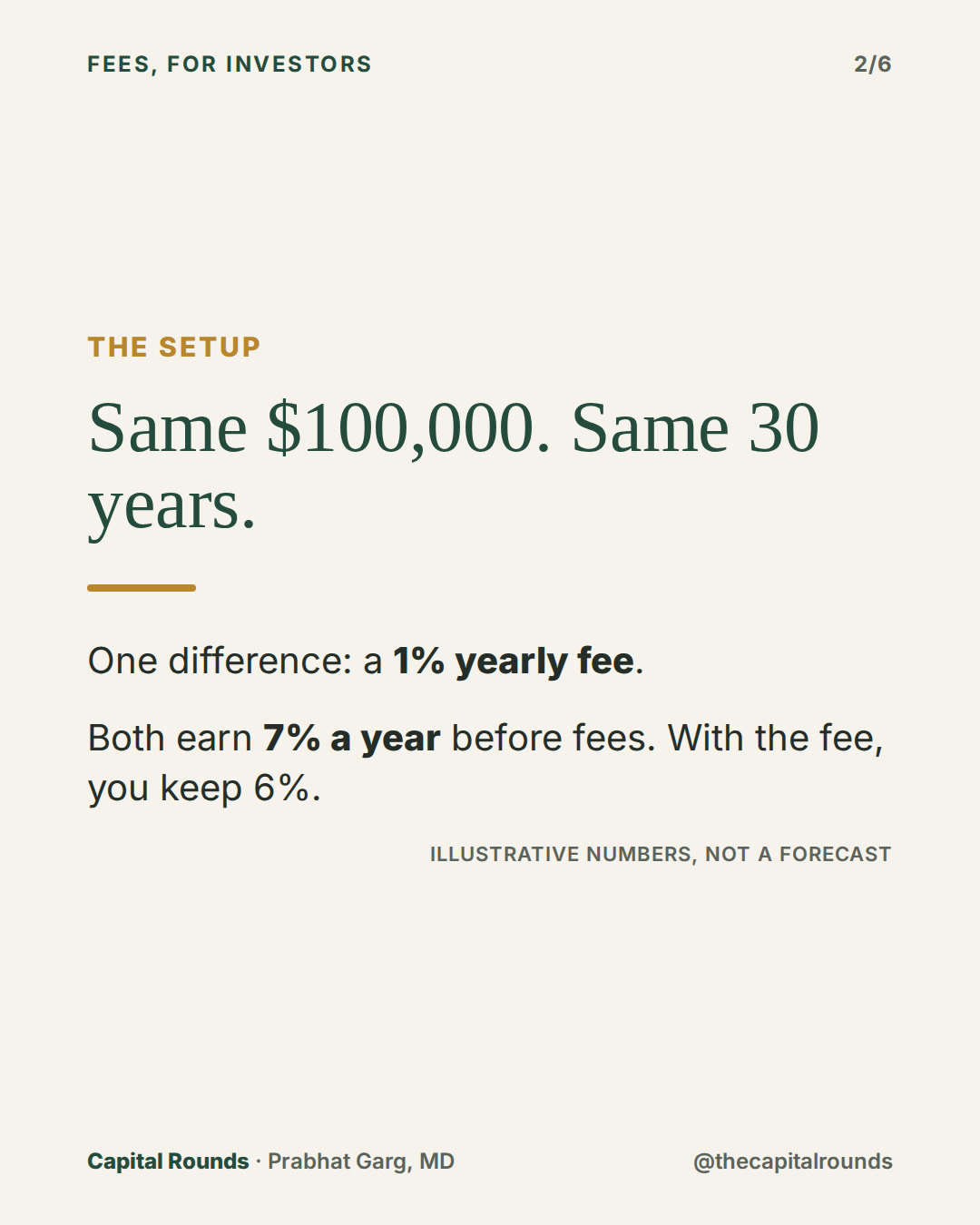
Illustrative math: $100,000, 30 years, 7% a year before fees.
Slide by slide
- "Just 1%" can cost you a quarter of your money
- Same $100,000. Same 30 years. One difference: a 1% yearly fee. (Illustrative: 7% a year before fees.)
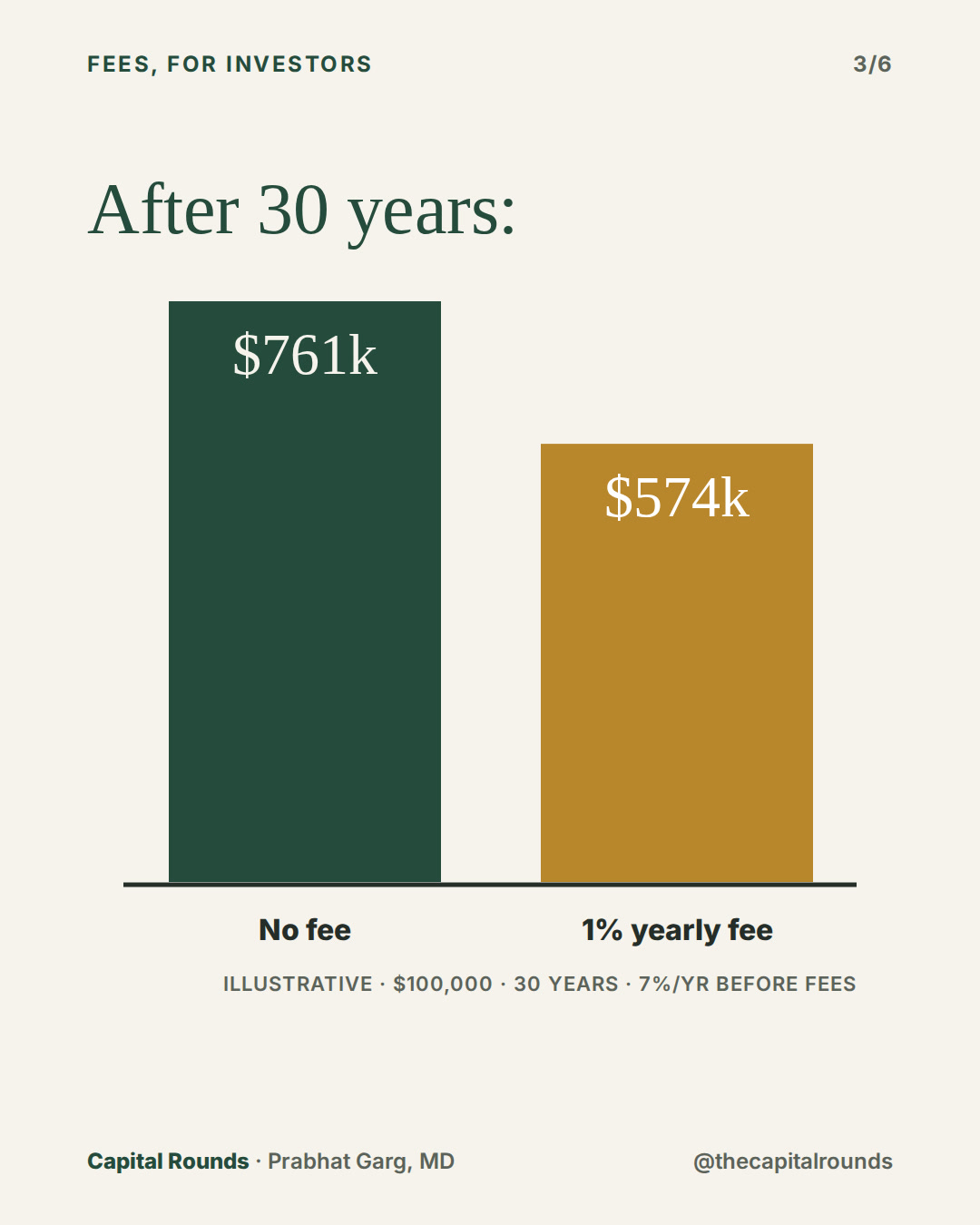
- No fee: about $761,000. With a 1% fee: about $574,000.
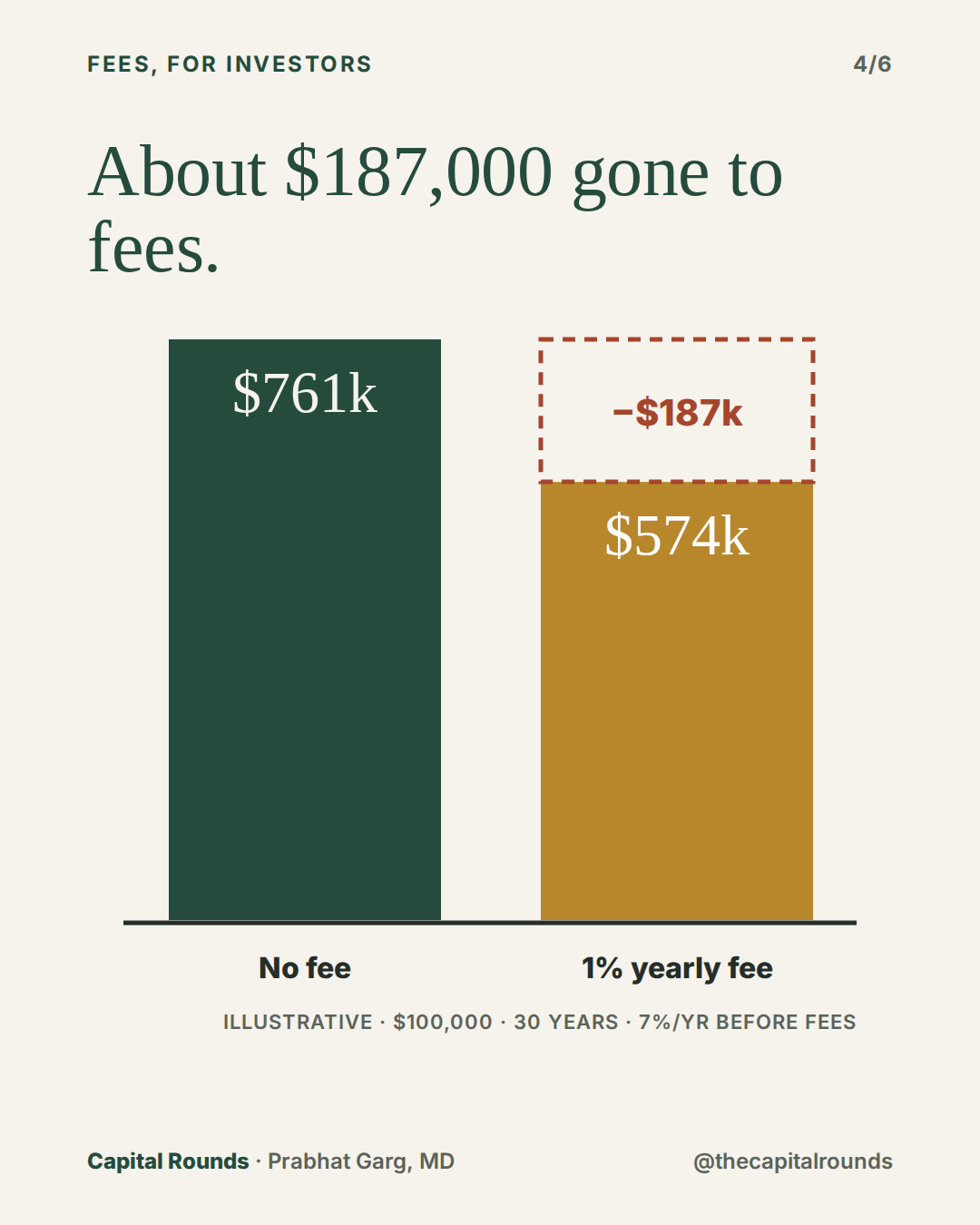
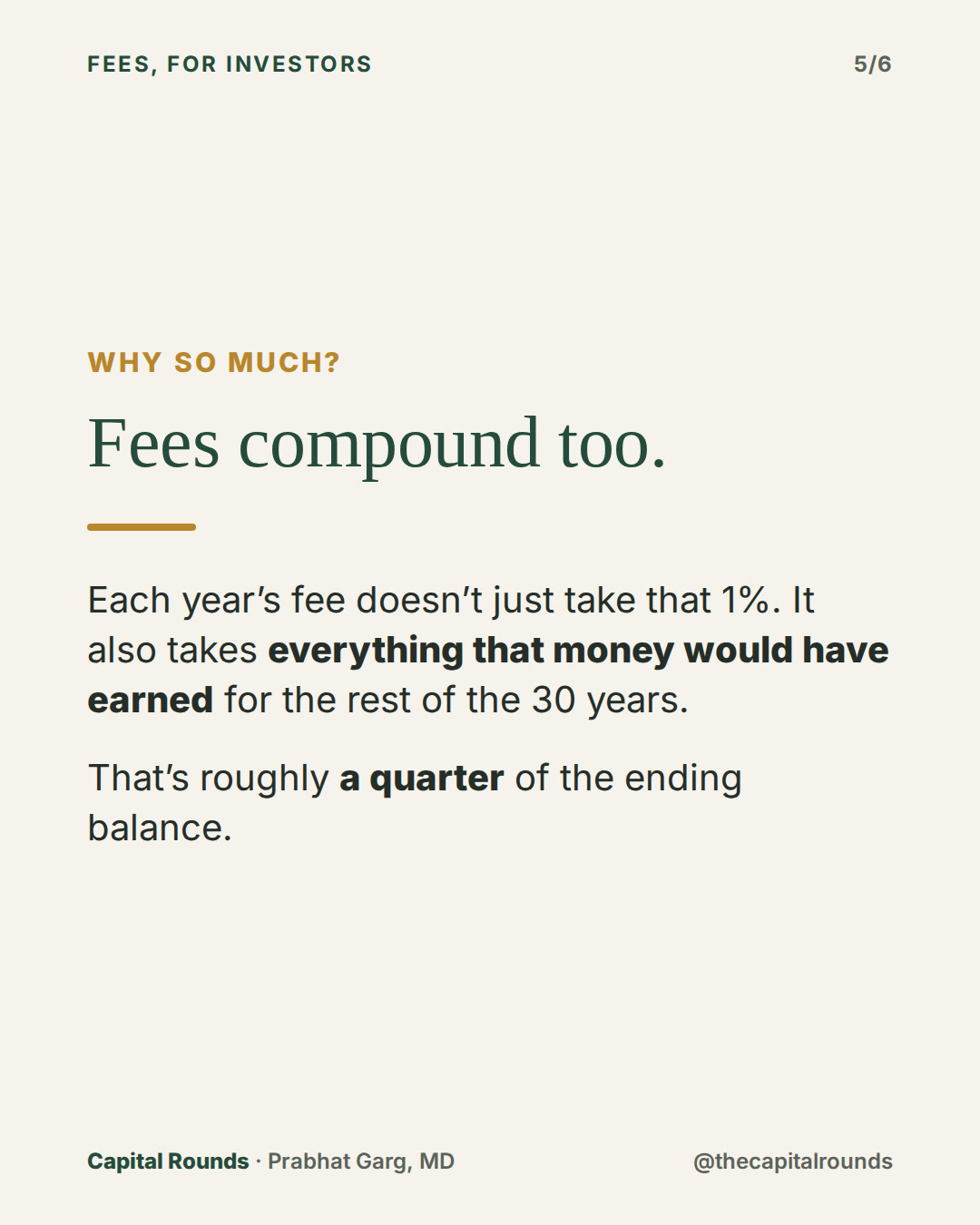
- That's about $187,000, or roughly a quarter of the ending balance, gone to fees.
- Why: fees compound too. Each year's fee also removes everything that money would have earned.
- The allocator's question: what am I getting for this fee, and could I get it cheaper? Education, not advice.
Sources
- Illustrative math, not a forecast: $100,000 for 30 years at 7% a year before fees grows to $100,000 × 1.07³⁰ ≈ $761,226; at 6% after a 1% fee, $100,000 × 1.06³⁰ ≈ $574,349. The difference, about $187,000, is 24.5% of the no-fee balance.