Rates are gravity
The most important number in investing isn't set by the Fed.
It's the 10-year Treasury yield: the risk-free rate every valuation starts from. When it rises, every other asset has to pay you more, so what it's worth today comes down.
Slide by slide
- The most important number in investing isn't set by the Fed. It's the 10-year U.S. Treasury yield.
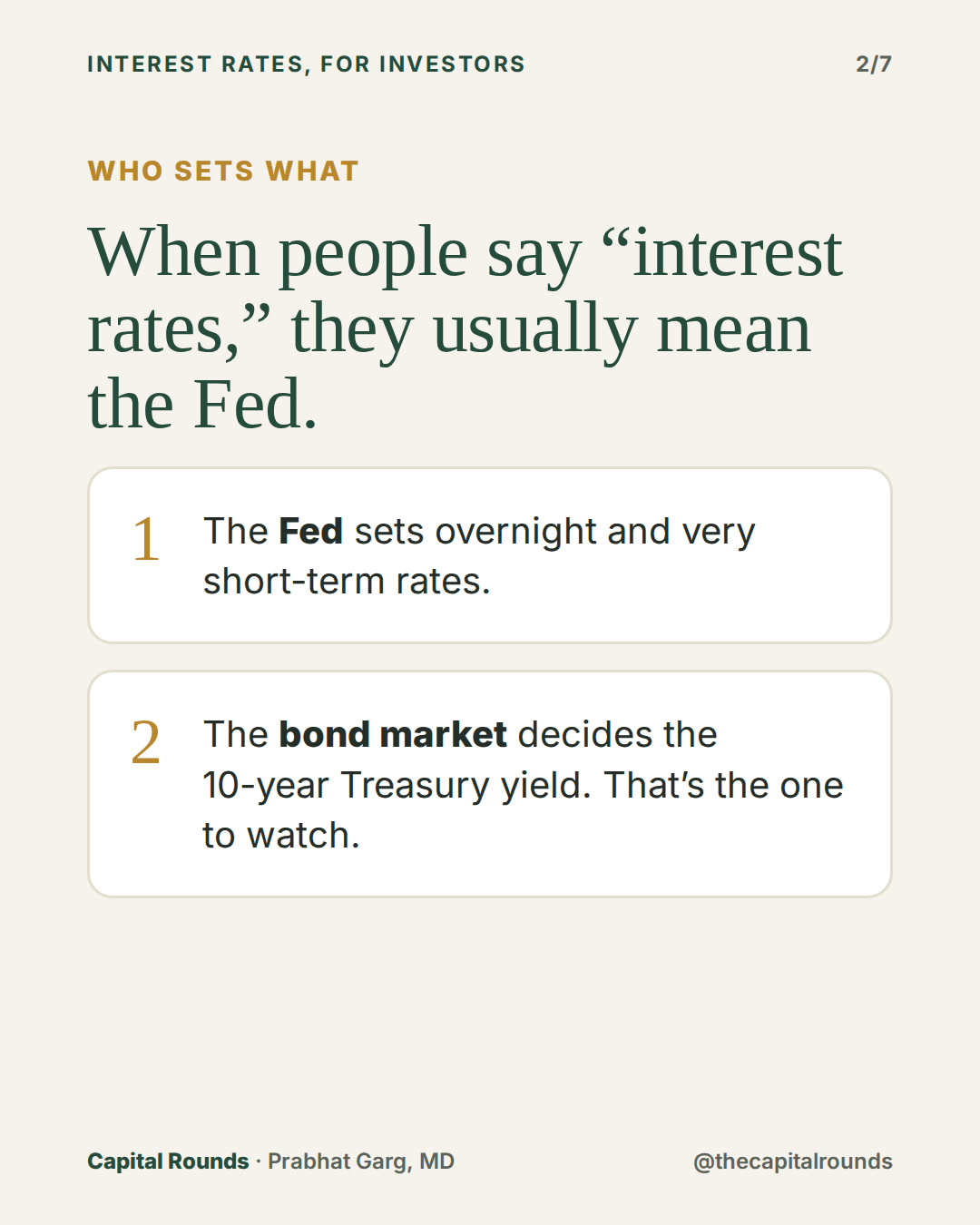
- Who sets what: the Fed sets overnight and very short-term rates. The bond market decides the 10-year Treasury yield, and that's the one to watch.
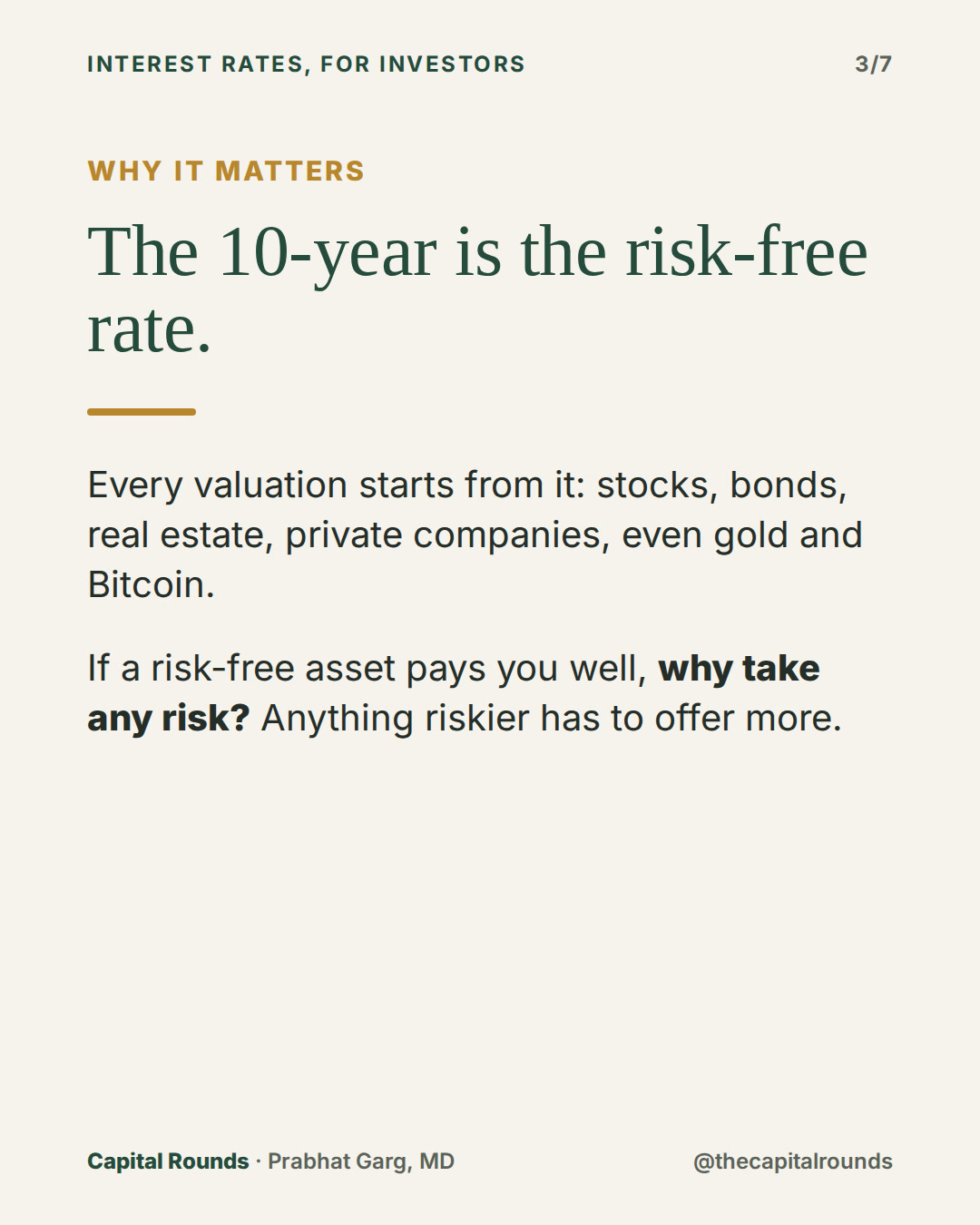
- The 10-year is the risk-free rate. Every valuation starts from it: stocks, bonds, real estate, private companies, even gold and Bitcoin. If a risk-free asset pays you well, why take any risk? Anything riskier has to offer more.
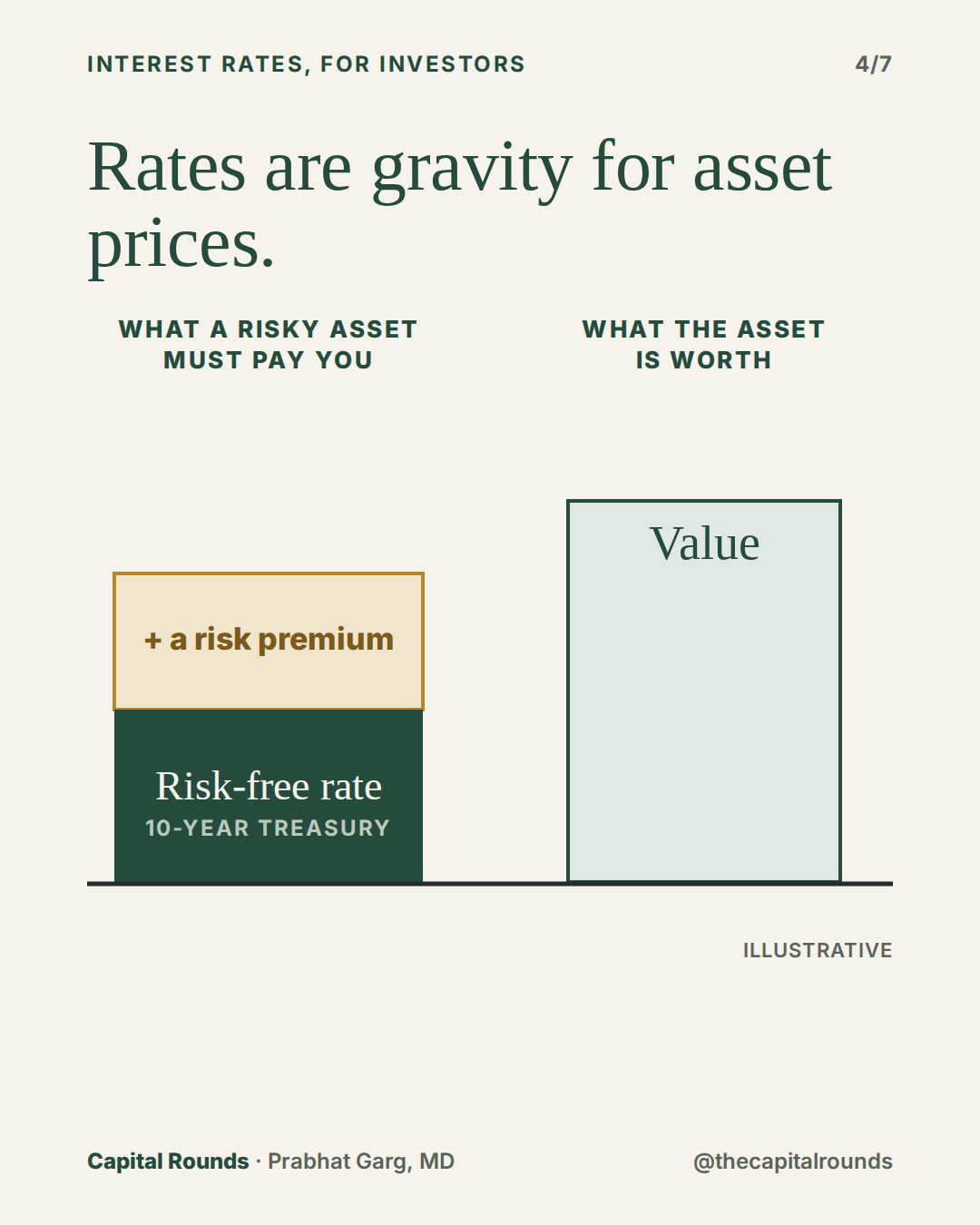
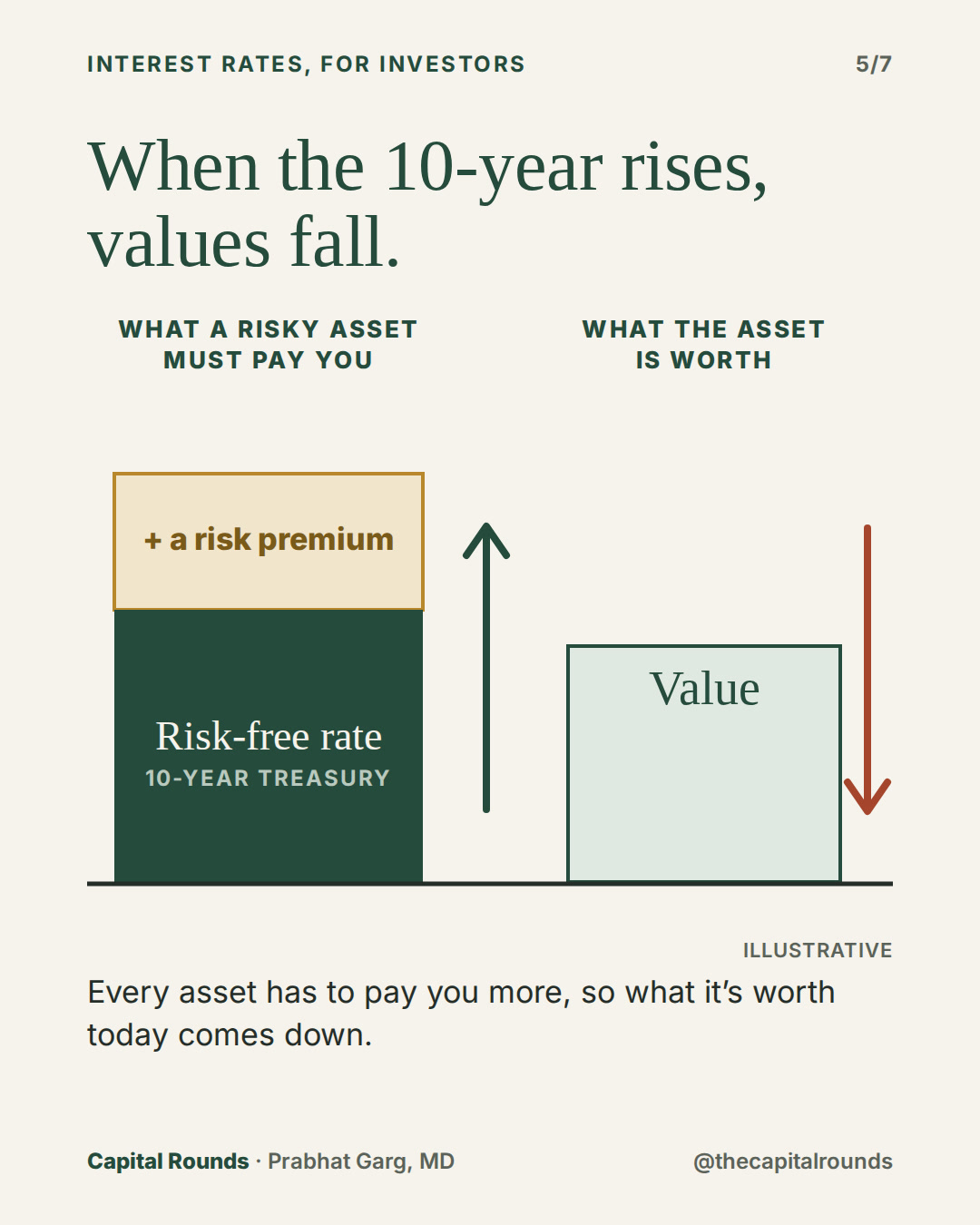
- Rates are gravity for asset prices. (Illustrative chart: what a risky asset must pay you, the risk-free rate plus a risk premium, against what the asset is worth.)
- When the 10-year rises, values fall. Every asset has to pay you more, so what it's worth today comes down.
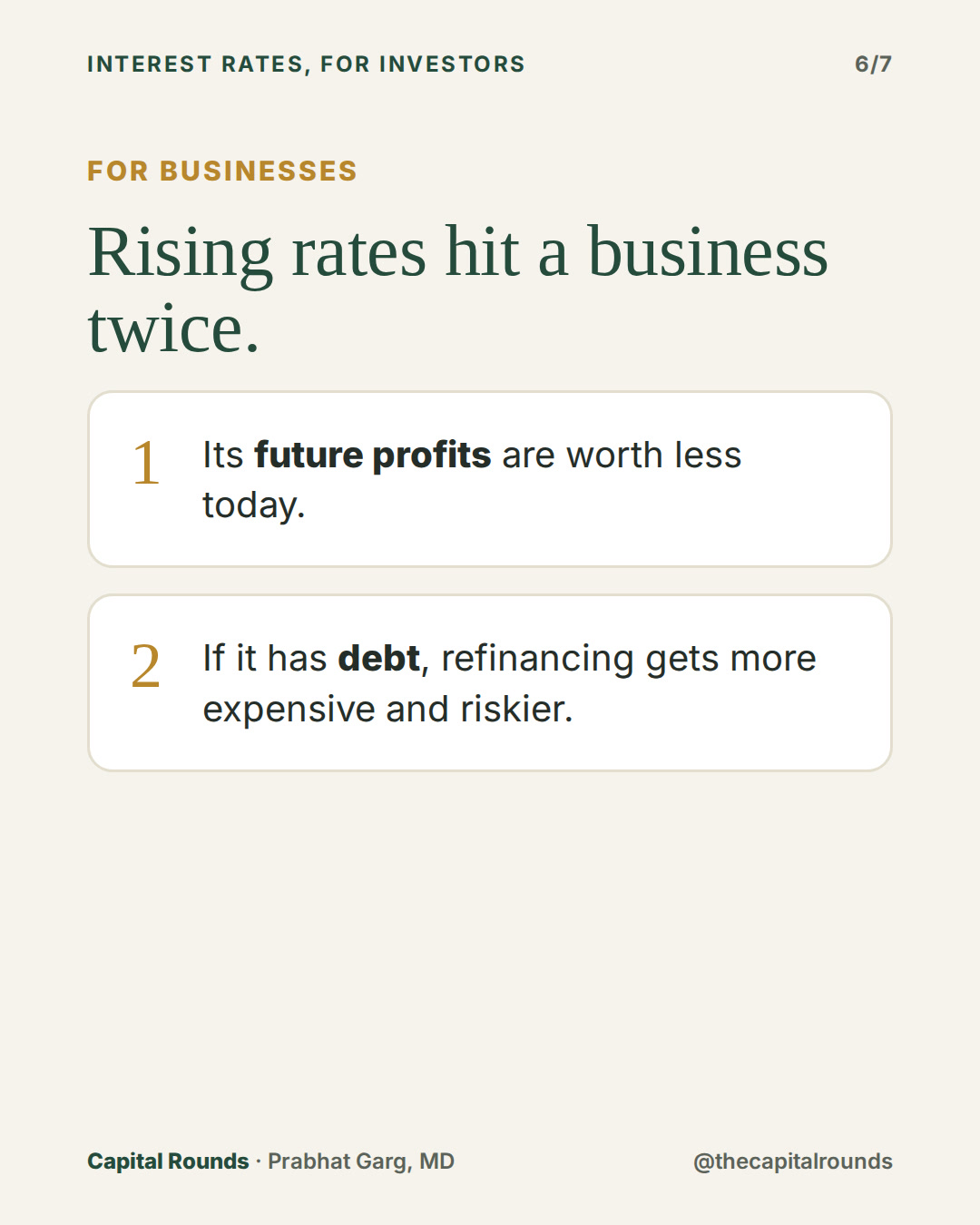
- Rising rates hit a business twice: its future profits are worth less today, and if it has debt, refinancing gets more expensive and riskier.
- Next time you hear "rates are up," check the 10-year.
Sources
- 10-year Treasury yield, daily history: FRED, DGS10
- From Capital Rounds episode 001, "Watch the 10-year, not the Fed": YouTube
- The gravity charts are illustrative, not data.